Emerging From the Shadow of Mental Illness

Mental illness affects every one of us…
You may think that this statement can't possibly be true. I'm here to tell you that it is. What makes this statement true is how you define and view mental illness. When we think of the word illness, we think of something physiological, tangible, testable. But the word "illness" comes from Old Norse where the word illr meant "bad, difficult, unfortunate, hard and even stingy". Nowhere in that early meaning was there anything about the body or physiology. It was all referencing our feelings regarding an event or situation.
If you think back to events in your life, periods of time, where you felt any of these emotions, then you know what that is like. It focuses on our response to things and I think, if you are honest with yourself, you will agree that the most difficult times were those where we were undone by an unexpected situation or event. After all, when things are going our way, we feel things are good, don't we?
But what happens when our responses are not in line with any event? What if we have emotions that overwhelm us for no reason at all? Then what? I think that is the beginning of mental illness. Anyone can be driven "out of their mind" by stress, trauma, loss, fear ... but when it happens without any of these external factors, we not only don't understand, we feel panic stricken.
We no longer feel we can trust or believe in our own mind.
__________________________________________________________________________________________________
The relationship between the
mind and the brain
In the simplest terms it has always been thought that the mind is everything that we know, feel, experience and reason. The brain is the tool the mind uses to do its bidding. We have been led to believe that the only reason the mind moves into the realm of mental illness is when the brain revolts against the mind and does not carry out instructions as it should.
It is this belief that explains why only 15% of mental illness patients use Talk Therapy while 62% of patients rely on psychotropic medications. After all we have become a society that believes it is so much easier to just take a pill and get on with our day. We also are blinded by science when it comes to our bodies, turning to synthetic versions of our body's own chemicals to manipulate our body and the mind.
But what we don't realize is that the brain is not the only pathway in the body that the mind uses and the mind is affected by much more than just the brain. This means that our view of the mind is flawed. In fact it is completely wrong.
The mind is the brain, the body, every cell and even extends beyond the physical boundaries of our body.
__________________________________________________________________________________________________
The real cause of mental illness
Bear with me everyone. Here's the important bit.
The real cause of mental illness is a disruption to any part of the mind that the body cannot manage or recover from. This can happen anywhere in the body and is often unnoticed until weeks, months or even years later.
Let's see how this works...
You are walking through your day and a mosquito bites you. You may not even notice, but your body does and it's on the case immediately to negate the effects of the bite. By the next day, you may have an itch but that will be gone in a day or two. But what if the same day you are exposed to the flu. Now you start having flu symptoms. You treat yourself for the flu, but this flu is creating joint pain and neurological symptoms. You seek treatment but the flu test is negative. Because flu tests are only accurate 50% of the time or if the test is given too soon or too late, it can miss the flu, so doctors will assume this is exactly what has happened and so will you. After a couple of weeks, you're finally feeling better. And on with your day you go...
Except a month later you begin to feel different - depressed, sad, a bit hopeless for no reason. You may mention it to your doctor and the only thing your doctor can offer is an anti-depressant medication. You take the medication, but now you're getting diarrhea and an upset stomach. You are having a lot of trouble sleeping, so now you are exhausted, just at the time when work is really stressful. Now you start taking Trazodone. Now you start having racing thoughts and having outbursts at work. You have started feeling agitated when there is any clutter in the house. You can't sleep because of the things you haven't finished in your day. Your doctor told you not to stop the SSRI anti-depressant and you can't go without the Trazodone, so what can you do and why is this happening?
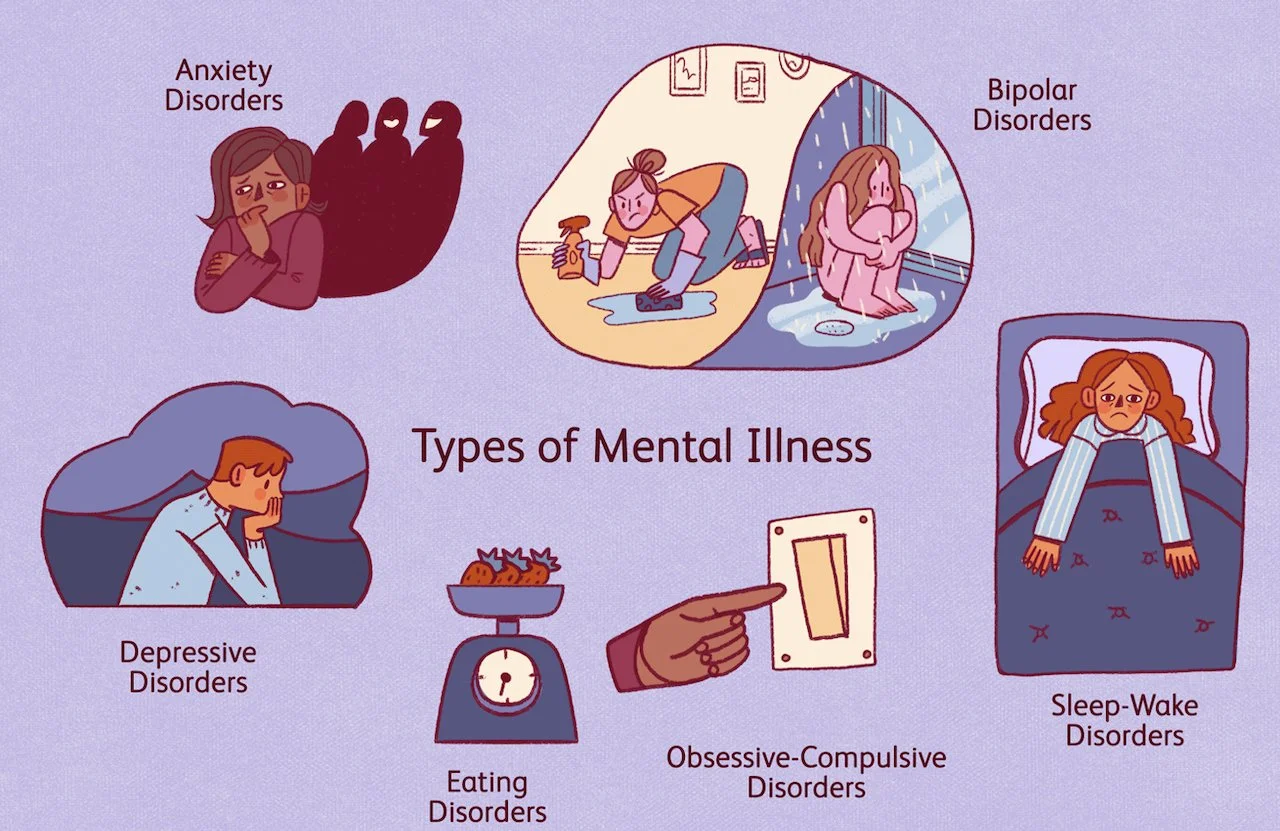
This is an example of any one of us drifting into mental illness.
The truth is that anything, whether a physical injury, an illness, an infection, a toxin exposure, an allergen, a food or just one straw too many for your camel's back, can start a cascade through your body's network that can become a mental illness.
In other words a mental illness happens when any part of the "mind" is affected and can't recover.
The Natural Path to Healing
From Mental Illness
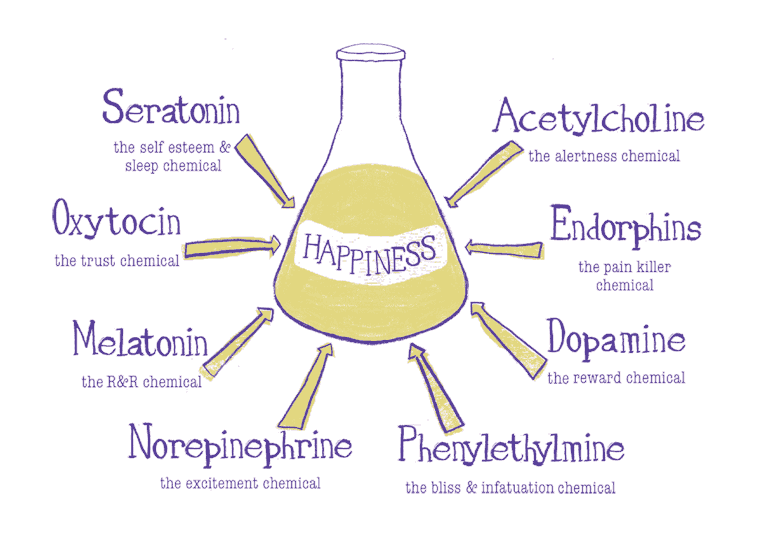
If you look at the image here, you will see that there are numerous body chemicals, used throughout the body that have an effect on your mind's mental and emotional state. This is why so many people are led by their physicians towards prescription drug therapy as a treatment for mental illness. But if you think that mental illness is rooted in these chemicals, you would be underestimating the situation.
Remember, mental illness is when the body has been unable to manage and recover from one or more challenges. Simply assuming that your symptoms are related to the levels of these chemicals would be too, well, simple. Instead, you want to find the root of the issue, not just focus on the symptoms as though they are the problem instead of the signs pointing you towards the problem. You may feel better with a prescription, but only as long as you continue to take it because you haven't solved the root of the issue. You may even be forced to move towards more extreme treatments if a prescription drug cannot truly control the symptoms.